Evangelical Lutheran Church Social Service – Hong Kong
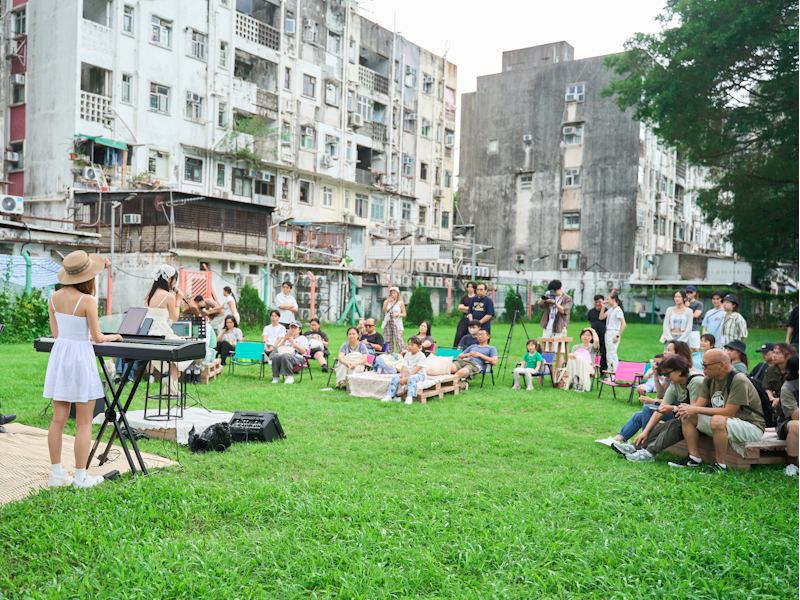
Brainstorming Exchange Sessions: Friends from various sectors gather to learn about the project vision of Luk Heung Commons, exchange ideas, and explore partnership opportunities.
Tai Po-based resident artist Au Wah Yan leads a printmaking workshop.
Community Tour Guides lead a guided tour for Tai Po residents for the first time after training.
The Luk Heung Art Fair, organized by students from the Department of Technical Production and Management of the Hong Kong Academy for Performing Arts, connects locals in organizing diverse activities for Tai Po. It is set to become a regular event.
In organizing the Monthly Kids’ Takeover, we see the community’s demand for play. Pictured is a lively scene of Messy Art Play.
Artist-in-Community Kevin Cheung guides parents during the Monthly Kids’ Takeover to co-create an Interactive Moving Wall Installation using aluminum cans.
Project partner Shirley hosts a World Cafe session, facilitating relaxed and genuine dialogue among residents.
Luk Heung Commons, a new, culture-led placemaking project, officially launched in January 2026. The 30-month initiative, based in Luk Heung Campus in Tai Po, is funded by ZeShan Foundation and co-organized by Happy Ageing Lab Foundation and Evangelical Lutheran Church Social Service – Hong Kong (ELCSS-HK). Through cultural programming, community co-creation, and cross-sector collaboration, the project identifies and utilizes local assets and potential, transforming underused spaces into a vibrant gathering place and collaborative platform for the community.
Luk Heung Commons is located on Plover Cove Road in Tai Po at the former Luk Heung San Tsuen Public School. The school was built on this site in the 1960s to serve the six Hakka villages of Luk Heung that had been relocated to Tai Po to make way for the construction of the Plover Cove Reservoir, and closed in 2006 amid declining student enrollment. Since 2007, the premises have been run by ELCSS-HK as the self-financing Luk Heung Campus, providing social services and continuing to serve the neighborhood.Luk Heung Commons aims to break down the boundaries of traditional social service agencies, and unlock the potential of underutilized spaces and off-hours. The two organizations harness new resources to build the community’s “hardware” and “software,” inviting locals, community partners, arts and cultural workers, social service agencies, academics, and others to participate and co-create. Rather than simply at filling gaps, Luk Heung Commons actively unearths community potential and fosters multi-party exchanges and cross-sector collaboration to discover, create, and share resources together. In doing so, it hopes to meet local needs and create a collaborative platform that can support the growth of the Tai Po community.
Co-Creating Value Through Four Pillars
We use cultural and creative practices as entry points. Through the following four pillars, we build up the resources, skills, and organizational and collaborative capacities of locals and stakeholders, so as to enhance the community’s overall capacity.
The Community Living Archive organizes teams of Community Ambassadors, publishes community zines, and collaborates with locals to conduct community observations and collaborates with locals on community observations – documenting and cataloguing the stories and histories of Tai Po’s people, events, places, and objects through diverse methods.
The Community Co-Creation Lab invites community artists and partners to guide locals through creative workshops, using their interests as starting points to collectively shape the venue and neighborhood in diverse ways, thereby fostering a sense of belonging and ownership.
The Cultural Prescription Station hosts diverse activities, serving as a testing ground for community experiments. Examples include the regular Monthly Kids’ Takeover and Luk Heung Art Market, where community members are actively recruited and supported to participate as partners. Here, arts, culture, and creativity are leveraged to promote healing and strengthen community bonds.
The Community Incubator Hub actively recruits locals eager to share their creativity. The platform provides comprehensive training and consultation to support them in realizing their ideas and talents through workshops, mini exhibitions, and other activities. This helps participants discover new possibilities for themselves, while the community benefits from innovative services.
Putting these four areas into local practice brings together scattered community resources, promotes mutual aid and partnership, and empowers residents in unlocking their potential. Every partner in these exchanges and co-learning becomes a driving force for healthy community development.
Cross-Sector Collaboration
Cultivating an ideal placemaking project requires bringing together the wisdom and experience of different sectors and residents alike. In the project’s initial phase, we held two brainstorming sessions to introduce the project vision, exchange ideas, and explore partnership opportunities, connecting over 70 professionals from the academic, arts and culture, healthcare, social service, and social innovation sectors. At the same time, we are expanding our community networks through openly recruiting local residents and organizations to become partners. In the first six months of operation since April 2026, the project has already successfully brought together over 40 local residents and organizations as partners, holding over 30 activities totalling more than 160 sessions, attracting over 2,100 attendees. The team will continue working with community partners to organize activities and collaborations, driving deeper community participation and partnership, and putting community-based cross-sector collaboration into practice.
Responding to Local Needs, Connecting Across Districts
Luk Heung Commons organizes activities in diverse formats and themes to meet the community’s varied needs. Overall, past participants mainly came from Tai Po (over 40%), but also included those from nearby Sha Tin (18%) and North District (14%), as well as outside the New Territories (over 13%). This shows that participation is gradually expanding beyond Tai Po, promoting cross-district exchanges. Participants were of different ages and backgrounds, with around 30% working full-time, 30% being children under 10, and 25% being teenagers and young people. Activities are tailored to different needs. The Monthly Kids’ Takeover, for example, attracts families to join community play sessions, Messy Art Play, and experiential workshops in spacious indoor and outdoor venues, offering a gathering place for locals of different backgrounds to connect and interact.
Co-Learning Exploration
This cross-sector, cross-organizational collaboration is a journey of shared learning. In the process, the two parties establish a common language, adapt to each other’s working styles, and refine their mindsets. This collaboration between an academic institution and a social service organization generates synergy and explores a new Community Stewardship model for placemaking in Hong Kong. Building on ELCSS-HK’s work of over a decade at the Luk Heung Campus, and its other local networks, we will actively experiment with different operating mechanisms for Luk Heung Commons during the 30-month project period. We aim to balance practical operations and resource use, while enhancing the capacity for innovation among c and stakeholders. We are working towards co-creating, co-managing, and co-sharing space and resources, and in doing so, unlocking the latent potential of the community.
The project, a sustained experiment in community innovation and collaboration, is now in full swing. Through continuous co-learning and co-creation, we hope to distill a sustainable and collaborative operating model for community spaces. This will enable the Luk Heung Commons to remain a gathering place for the community, realizing its potential, supporting Tai Po in developing community resilience, and, in the long run, fostering a culture of mutual care and support.
Luk Heung Commons Team (Happy Ageing Lab Foundation, Evangelical Lutheran Church Social Service – Hong Kong)
Brainstorming Exchange Sessions: Friends from various sectors gather to learn about the project vision of Luk Heung Commons, exchange ideas, and explore partnership opportunities.
Tai Po-based resident artist Au Wah Yan leads a printmaking workshop.
Community Tour Guides lead a guided tour for Tai Po residents for the first time after training.
The Luk Heung Art Fair, organized by students from the Department of Technical Production and Management of the Hong Kong Academy for Performing Arts, connects locals in organizing diverse activities for Tai Po. It is set to become a regular event.
In organizing the Monthly Kids’ Takeover, we see the community’s demand for play. Pictured is a lively scene of Messy Art Play.
Artist-in-Community Kevin Cheung guides parents during the Monthly Kids’ Takeover to co-create an Interactive Moving Wall Installation using aluminum cans.
Project partner Shirley hosts a World Cafe session, facilitating relaxed and genuine dialogue among residents.
“Market for Good” is a community-based youth entrepreneurship incubation program. It aims to encourage youth to develop entrepreneurial ideas that meet community needs through creativity and experimentation, thereby generating shared value and co-creating socially valuable market operation models with community stakeholders.
Evangelical Lutheran Church Social Service - Hong Kong, Hong Kong
Health Concerns at Grassroots
Since 2020, the North District Integrated Youth Service Centre of the Evangelical Lutheran Church Social Service – Hong Kong (“ELCSS-HK”) has reached many vulnerable families in remote villages through pandemic support services in North District. The team found the physical and mental health of both children and parents severely impacted by poor living conditions, financial pressure, and frequent relocation. Many children suffered from frequent illnesses and unbalanced diets, while families rarely had the opportunity to go on outings or participate in social activities, which could hinder the children’s development as well as family relationships in the long term.
The team organized monthly neighborhood gatherings to regularly meet with these families, arranging services such as free-of-charge Traditional Chinese Medicine consultations and eye tests for children. This gradually increased health awareness and established a community focal point. To further address the holistic health needs of grassroots families, the team explored expanding primary healthcare and developmental family services.
Underused Space Transformed Into Warm Community Hub
With the support of ZeShan Foundation, ELCSS-HK launched the North District Community Hub. The project, which runs from March 2025 to February 2027, aims to improve the physical and mental health of grassroots children, adolescents, and their families in North District, enabling lives to connect and joy to be shared.
Previously, the Centre’s sub-base at Choi Yuk House of Choi Yuen Estate in Sheung Shui only opened for specific activities. The team has now put the space to better use during previous idle hours, creating a community hub by rearranging existing facilities and adding furniture. Its opening hours are tailored to the needs of parents and youth, providing an extended living space for families in inadequate housing. In their free time, families gather to share homemade soup, while children do homework or relax on bean bags playing video games after school, evidently feeling very at home.
Cross-disciplinary Collaboration to Identify Health Needs
The North District Community Hub is underpinned by the belief that health should not be constrained by one’s environment or financial means, and that everyone should have the capacity and resources to take charge of their own health. The project adopts a community-based medical-social collaboration model, using social prescribing and health management as interventions to uncover and connect local assets and resources. The team arranged health screenings in partnership with the Jockey Club Healthy Community Hub Empowerment Scheme for residents with inadequate housing, which was under the Chinese University of Hong Kong (CUHK) Jockey Club School of Public Health and Primary Care. The results revealed the prevalence of picky eating among children; that over 60% of parents showed at least one early symptom of the Three Highs (high blood pressure, high blood sugar, high cholesterol); and that around one-fifth of families reported emotional distress affecting both parents and children, with some parents requiring regular visits to public hospitals. Those families identified as having health risks received case follow-ups and introductions to suitable resources.
Four Social Prescriptions For Healthy Community
Health is enhanced bit by bit in daily life. To create a healthy community, the team has designed four types of non-medical social prescriptions with local characteristics – food, exercises, nature, and arts – which are matched with families’ health needs.
In terms of food prescriptions, the team and CUHK co-organized mindful eating groups for caregivers as well as guided tours of wet markets and dawn markets. Registered dietitians shared how to use fresh, affordable local ingredients and explored recipes to create healthy dishes that children enjoy. A participant shared that her child disliked fish, but she developed the idea of mixing canned sardines, seaweed, and sweetcorn to create sardine rice balls, which became very popular. This process strengthened parent-child relationships while addressing the problem of picky eating.
As for nature prescriptions to heal body and mind, given North District’s proximity to the countryside, the project partnered with the food and agriculture education team Sow & Grow to organize a food and agriculture group. Families had the chance to experience first-hand the “farm-to-table” process, from clearing and nourishing the fields to selecting seeds, planting, and harvesting. Many children were thrilled to see for the first time vegetables they themselves had grown, and tried making homemade roselle jam. Their interest in vegetables, and the physical work brought parents and children closer to each other and to the land.
The opening ceremony of the North District Community Hub was held on 24 October 2025. It was officiated by Mr Chris Sun, JP, Secretary for Labour and Welfare; Ms Irene So, Executive Director of ZeShan Foundation; and Mr Kwok Kang-ming, Chairman of the Executive Committee of ELCSS-HK. The guests together transplanted wampee saplings nurtured by the community, symbolizing how the efforts to nourish grassroots families’ wellbeing has firmly taken root in North District.
The project goes beyond service provision, also emphasizing empowerment and encouraging self-help and mutual help among families, so as to improve the quality of life and strengthen social capital. The project will launch Community Connector trainings, so that beneficiary families and health-conscious residents can receive professional training to bring health further into the community.
North District Community Hub Team The Evangelical Lutheran Church Social Service – Hong Kong
Children introducing delicious, bite-sized crispy rice balls to the officiating guest, Mr Chris Sun (Secretary for Labour and Welfare of Hong Kong Special Administrative Region).
Kaifong leading a slow morning jog along Ng Tung River
Happy Farmland Group planting autumn carrots and choy sum
Children delighted by their first bites of roselle and its tart taste
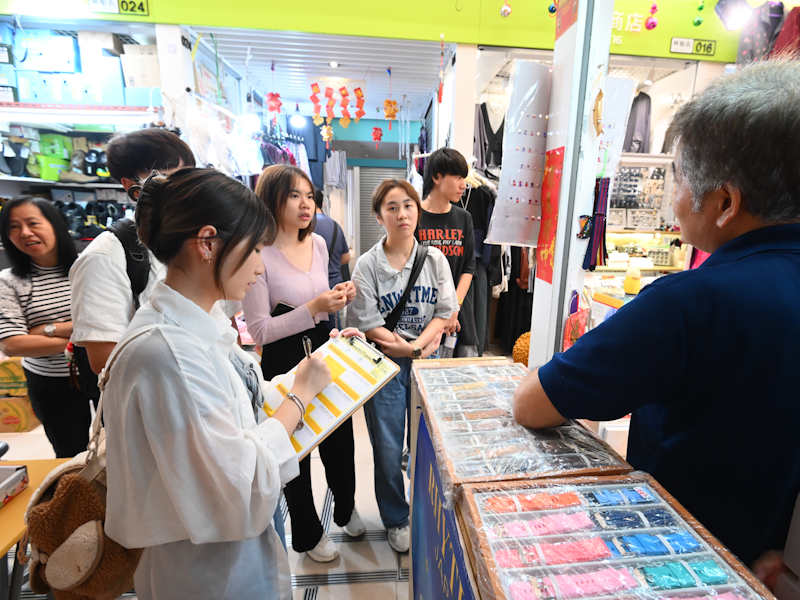
A dietitian leading a wet market tour to share tips on picking fresh and affordable ingredients
Sardine rice balls, designed by kaifong Ah Kwan, is a big hit among children
Kaifong working at a dumpling shop shares how to make nutritious homemade dumplings
Children introducing delicious, bite-sized crispy rice balls to the officiating guest, Mr Chris Sun (Secretary for Labour and Welfare of Hong Kong Special Administrative Region).
Kaifong leading a slow morning jog along Ng Tung River
Happy Farmland Group planting autumn carrots and choy sum
Children delighted by their first bites of roselle and its tart taste
A dietitian leading a wet market tour to share tips on picking fresh and affordable ingredients
Sardine rice balls, designed by kaifong Ah Kwan, is a big hit among children
Kaifong working at a dumpling shop shares how to make nutritious homemade dumplings
Health Concerns at Grassroots
Since 2020, the North District Integrated Youth Service Centre of the Evangelical Lutheran Church Social Service – Hong Kong (“ELCSS-HK”) has reached many vulnerable families in remote villages through pandemic support services in North District. The team found the physical and mental health of both children and parents severely impacted by poor living conditions, financial pressure, and frequent relocation. Many children suffered from frequent illnesses and unbalanced diets, while families rarely had the opportunity to go on outings or participate in social activities, which could hinder the children’s development as well as family relationships in the long term.
The team organized monthly neighborhood gatherings to regularly meet with these families, arranging services such as free-of-charge Traditional Chinese Medicine consultations and eye tests for children. This gradually increased health awareness and established a community focal point. To further address the holistic health needs of grassroots families, the team explored expanding primary healthcare and developmental family services.
Underused Space Transformed Into Warm Community Hub
With the support of ZeShan Foundation, ELCSS-HK launched the North District Community Hub. The project, which runs from March 2025 to February 2027, aims to improve the physical and mental health of grassroots children, adolescents, and their families in North District, enabling lives to connect and joy to be shared.
Previously, the Centre’s sub-base at Choi Yuk House of Choi Yuen Estate in Sheung Shui only opened for specific activities. The team has now put the space to better use during previous idle hours, creating a community hub by rearranging existing facilities and adding furniture. Its opening hours are tailored to the needs of parents and youth, providing an extended living space for families in inadequate housing. In their free time, families gather to share homemade soup, while children do homework or relax on bean bags playing video games after school, evidently feeling very at home.
Cross-disciplinary Collaboration to Identify Health Needs
The North District Community Hub is underpinned by the belief that health should not be constrained by one’s environment or financial means, and that everyone should have the capacity and resources to take charge of their own health. The project adopts a community-based medical-social collaboration model, using social prescribing and health management as interventions to uncover and connect local assets and resources. The team arranged health screenings in partnership with the Jockey Club Healthy Community Hub Empowerment Scheme for residents with inadequate housing, which was under the Chinese University of Hong Kong (CUHK) Jockey Club School of Public Health and Primary Care. The results revealed the prevalence of picky eating among children; that over 60% of parents showed at least one early symptom of the Three Highs (high blood pressure, high blood sugar, high cholesterol); and that around one-fifth of families reported emotional distress affecting both parents and children, with some parents requiring regular visits to public hospitals. Those families identified as having health risks received case follow-ups and introductions to suitable resources.
Four Social Prescriptions For Healthy Community
Health is enhanced bit by bit in daily life. To create a healthy community, the team has designed four types of non-medical social prescriptions with local characteristics – food, exercises, nature, and arts – which are matched with families’ health needs.
In terms of food prescriptions, the team and CUHK co-organized mindful eating groups for caregivers as well as guided tours of wet markets and dawn markets. Registered dietitians shared how to use fresh, affordable local ingredients and explored recipes to create healthy dishes that children enjoy. A participant shared that her child disliked fish, but she developed the idea of mixing canned sardines, seaweed, and sweetcorn to create sardine rice balls, which became very popular. This process strengthened parent-child relationships while addressing the problem of picky eating.
As for nature prescriptions to heal body and mind, given North District’s proximity to the countryside, the project partnered with the food and agriculture education team Sow & Grow to organize a food and agriculture group. Families had the chance to experience first-hand the “farm-to-table” process, from clearing and nourishing the fields to selecting seeds, planting, and harvesting. Many children were thrilled to see for the first time vegetables they themselves had grown, and tried making homemade roselle jam. Their interest in vegetables, and the physical work brought parents and children closer to each other and to the land.
The opening ceremony of the North District Community Hub was held on 24 October 2025. It was officiated by Mr Chris Sun, JP, Secretary for Labour and Welfare; Ms Irene So, Executive Director of ZeShan Foundation; and Mr Kwok Kang-ming, Chairman of the Executive Committee of ELCSS-HK. The guests together transplanted wampee saplings nurtured by the community, symbolizing how the efforts to nourish grassroots families’ wellbeing has firmly taken root in North District.
The project goes beyond service provision, also emphasizing empowerment and encouraging self-help and mutual help among families, so as to improve the quality of life and strengthen social capital. The project will launch Community Connector trainings, so that beneficiary families and health-conscious residents can receive professional training to bring health further into the community.
North District Community Hub Team The Evangelical Lutheran Church Social Service – Hong Kong
While pursuing economic development, Hong Kong, like many developed regions, faces severe environmental and social challenges. Among these, the issue of food waste is particularly prominent. All citizens and shops in Hong Kong generate up to 3,190 tons of food waste on average every day (2023 data), an amount equivalent to the weight of 246 double-decker buses. This continuously brings immense pressure to landfills and the local environment. When food waste decomposes in landfills, it releases potent greenhouse gases like methane, severely exacerbating climate change. Additionally, the collection and transportation of food waste also creates a significant carbon footprint. To address the environmental pressure and climate impact brought by this massive amount of food waste, we urgently need innovative and sustainable solutions to effectively utilize food waste and reduce waste at the source. To build Hong Kong into a sustainable and livable city, we require not only long-term and effective policies to address these pressing environmental issues, but also major value and behavioral changes in society.
In order to address these urgent challenges, the Bio-Loop Nature-based Food Waste Recycling Pilot Scheme (“this pilot project”) is set to launch in April 2025. This forward-thinking initiative, led by A Plastic Ocean Foundation with funding from ZeShan Foundation, brings together Gaw Capital People’s Place and Lingnan University’s Science Unit. Through this pilot project, pre-consumer food waste are collected from malls in North and Tuen Mun districts. Black soldier fly (BSF) technology and IoT-optimized aquaponics are used to transform food waste into edible fish and vegetables, the harvests of which will be donated to underprivileged communities through local charities. This sustainable solution reduces landfill pressure and carbon emissions while supporting a circular economy. To engage the public and promote sustainable practices, it offers free guided tours of its waste processing and aquaponics facilities for schools and the food and beverage industry stakeholders.
Bio-Loop Pilot Details
This pilot project was developed and designed by A Plastic Ocean Foundation, integrating nature-based solutions with the principles of sustainability and circular economy. By combining BSF technology and IoT-optimized aquaponics systems, this project transforms pre-consumer food waste from local restaurants into valuable products such as edible fish and vegetables.
In addition to nature-based solutions for food waste recycling, this pilot project incorporates a community-based sustainable waste management approach. Following the principle of “local production and processing,” the pre-consumer food waste from restaurants will be transported to IoT-enabled BSF facilities in each district accordingly. It reduces reliance on centralized waste facilities, thereby lowering the risks of waste leakage, minimizing carbon emissions during transportation, and easing the pressure on landfills.
The 2-year Pilot began in April 2025. During Phase One, pre-consumer food waste will be collected from restaurants located at People’s Place’s Wah Ming, Wah Sum, and Yung Shing Shopping Centres in the North District, and H.A.N.D.S Shopping Centre in Tuen Mun. We will then transport the waste to IoT-enabled BSF facilities in each district. The IoT technology boosts efficiency, monitoring and adjusting conditions like temperature to optimize larvae feeding. The black soldier fly will efficiently convert organic substances from food scraps into larval biomass rich in protein and lipids. The resulting larval biomass can be processed into a protein-rich feed ingredient suitable for aquaponic systems. In aquaponics, these nutrients are subsequently transferred through the food web: from the feed to the fish, and from the fish waste to the plants and facilitating nutrient cycling.
In Phase Two, this pilot project aims to process at least six tons of community pre-consumption food waste and produce at least one ton of aquaponics products, which will be donated to underprivileged communities through local charities. By completing this cycle, the Pilot turns waste into benefiting the community.
Community Engagement and Public Education
To raise awareness, we will hold educational booths and exhibitions at H.A.N.D.S Shopping Centre in Tuen Mun during summer 2025. Local schools, non-profit organizations and food and beverage industry stakeholders are also invited to participate in free guided tours of BSF facilities at Lingnan University and aquaponics systems to learn about sustainable waste management and circular economy practices.
We envision the Bio-Loop system being promoted in the 2 pilot districts, and to be replicated as a demonstration case in other communities and potentially setting a stage for policy discussion. We hope to collaborate with more like-minded partners to explore opportunities and possibilities for project expansion, thereby increasing the impact of Bio-Loop system. We are striving to bring about structural changes and make innovative strides in environmental sustainability and resource management.
Willy Kwong
CEO
A Plastic Ocean Foundation
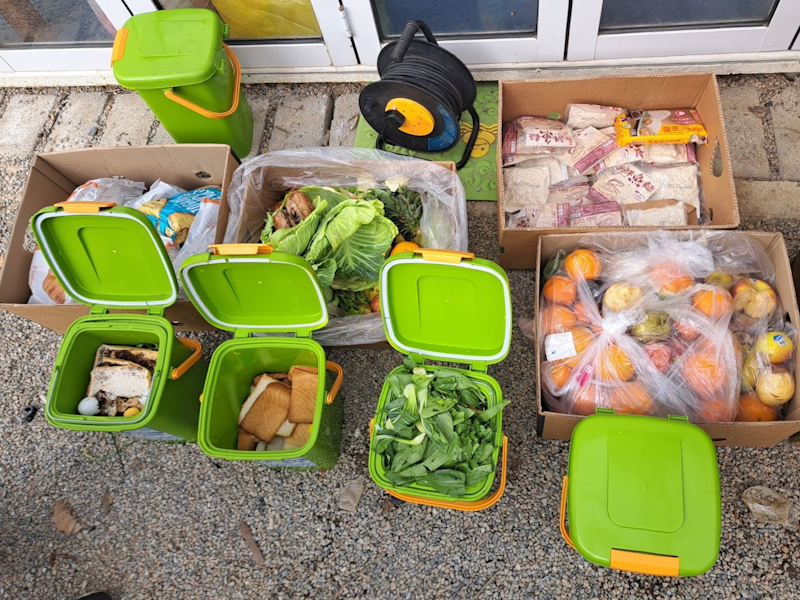
Regular collection of kitchen scraps from restaurants
Kitchen scraps collected from restaurants
IoT-enabled BSF facilities in operation
A vertical aquaponics system fed with black soldier fly fish feed
An indoor multi-layer aquaponics system fed with black soldier fly fish feed
Regular collection of kitchen scraps from restaurants
Kitchen scraps collected from restaurants
IoT-enabled BSF facilities in operation
A vertical aquaponics system fed with black soldier fly fish feed
An indoor multi-layer aquaponics system fed with black soldier fly fish feed
While pursuing economic development, Hong Kong, like many developed regions, faces severe environmental and social challenges. Among these, the issue of food waste is particularly prominent. All citizens and shops in Hong Kong generate up to 3,190 tons of food waste on average every day (2023 data), an amount equivalent to the weight of 246 double-decker buses. This continuously brings immense pressure to landfills and the local environment. When food waste decomposes in landfills, it releases potent greenhouse gases like methane, severely exacerbating climate change. Additionally, the collection and transportation of food waste also creates a significant carbon footprint. To address the environmental pressure and climate impact brought by this massive amount of food waste, we urgently need innovative and sustainable solutions to effectively utilize food waste and reduce waste at the source. To build Hong Kong into a sustainable and livable city, we require not only long-term and effective policies to address these pressing environmental issues, but also major value and behavioral changes in society.
In order to address these urgent challenges, the Bio-Loop Nature-based Food Waste Recycling Pilot Scheme (“this pilot project”) is set to launch in April 2025. This forward-thinking initiative, led by A Plastic Ocean Foundation with funding from ZeShan Foundation, brings together Gaw Capital People’s Place and Lingnan University’s Science Unit. Through this pilot project, pre-consumer food waste are collected from malls in North and Tuen Mun districts. Black soldier fly (BSF) technology and IoT-optimized aquaponics are used to transform food waste into edible fish and vegetables, the harvests of which will be donated to underprivileged communities through local charities. This sustainable solution reduces landfill pressure and carbon emissions while supporting a circular economy. To engage the public and promote sustainable practices, it offers free guided tours of its waste processing and aquaponics facilities for schools and the food and beverage industry stakeholders.
Bio-Loop Pilot Details
This pilot project was developed and designed by A Plastic Ocean Foundation, integrating nature-based solutions with the principles of sustainability and circular economy. By combining BSF technology and IoT-optimized aquaponics systems, this project transforms pre-consumer food waste from local restaurants into valuable products such as edible fish and vegetables.
In addition to nature-based solutions for food waste recycling, this pilot project incorporates a community-based sustainable waste management approach. Following the principle of “local production and processing,” the pre-consumer food waste from restaurants will be transported to IoT-enabled BSF facilities in each district accordingly. It reduces reliance on centralized waste facilities, thereby lowering the risks of waste leakage, minimizing carbon emissions during transportation, and easing the pressure on landfills.
The 2-year Pilot began in April 2025. During Phase One, pre-consumer food waste will be collected from restaurants located at People’s Place’s Wah Ming, Wah Sum, and Yung Shing Shopping Centres in the North District, and H.A.N.D.S Shopping Centre in Tuen Mun. We will then transport the waste to IoT-enabled BSF facilities in each district. The IoT technology boosts efficiency, monitoring and adjusting conditions like temperature to optimize larvae feeding. The black soldier fly will efficiently convert organic substances from food scraps into larval biomass rich in protein and lipids. The resulting larval biomass can be processed into a protein-rich feed ingredient suitable for aquaponic systems. In aquaponics, these nutrients are subsequently transferred through the food web: from the feed to the fish, and from the fish waste to the plants and facilitating nutrient cycling.
In Phase Two, this pilot project aims to process at least six tons of community pre-consumption food waste and produce at least one ton of aquaponics products, which will be donated to underprivileged communities through local charities. By completing this cycle, the Pilot turns waste into benefiting the community.
Community Engagement and Public Education
To raise awareness, we will hold educational booths and exhibitions at H.A.N.D.S Shopping Centre in Tuen Mun during summer 2025. Local schools, non-profit organizations and food and beverage industry stakeholders are also invited to participate in free guided tours of BSF facilities at Lingnan University and aquaponics systems to learn about sustainable waste management and circular economy practices.
We envision the Bio-Loop system being promoted in the 2 pilot districts, and to be replicated as a demonstration case in other communities and potentially setting a stage for policy discussion. We hope to collaborate with more like-minded partners to explore opportunities and possibilities for project expansion, thereby increasing the impact of Bio-Loop system. We are striving to bring about structural changes and make innovative strides in environmental sustainability and resource management.
‘May the Five Blessings descend upon your door’ is an auspicious saying commonly exchanged on festive occasions. In fact, ‘Five Blessings’ comes from Confucian classic The Book of Documents and refers to longevity, wealth, health, virtue, and peaceful passing, in its chapter on Great Plan. In today’s Hong Kong, how can we ensure that our loved ones and ourselves enjoy all Five Blessings in our finite lives?
‘Five Blessings’ is Hong Kong’s first professional life-death planning service. It was launched by OneTake ted jointly with two other local social enterprises, ‘ForeverGift.hk’ and ‘Minimal Funeral Limited’. Let it Go.’ Our team of lawyers, doctors, and funeral planners offer a one-stop solution to arranging one’s will, enduring power of attorney, and advanced directive in relation to medical treatment, besides funeral planning and capturing life stories. We organise talks for social service organisations and the public, so as to help people of different socio-economic backgrounds make preparations for themselves and their loved ones with ease.
To ensure that underprivileged communities can access such services, we established Hong Kong’s first Five Blessings Center, with funding from ZeShan Foundation, other family foundations, and the Social Innovation and Entrepreneurship Development Fund (SIE Fund), as well as support from the Hong Kong Council of Social Service’s Impact Incubator. Our Inner Peace Program aims to popularise life-death planning through public education and professional consultation, as well as offering ‘Five Blessings’ services free-of-charge to older adults and chronically or terminally ill patients referred by social service organisations.
Five Blessings Centre, One Take Limited
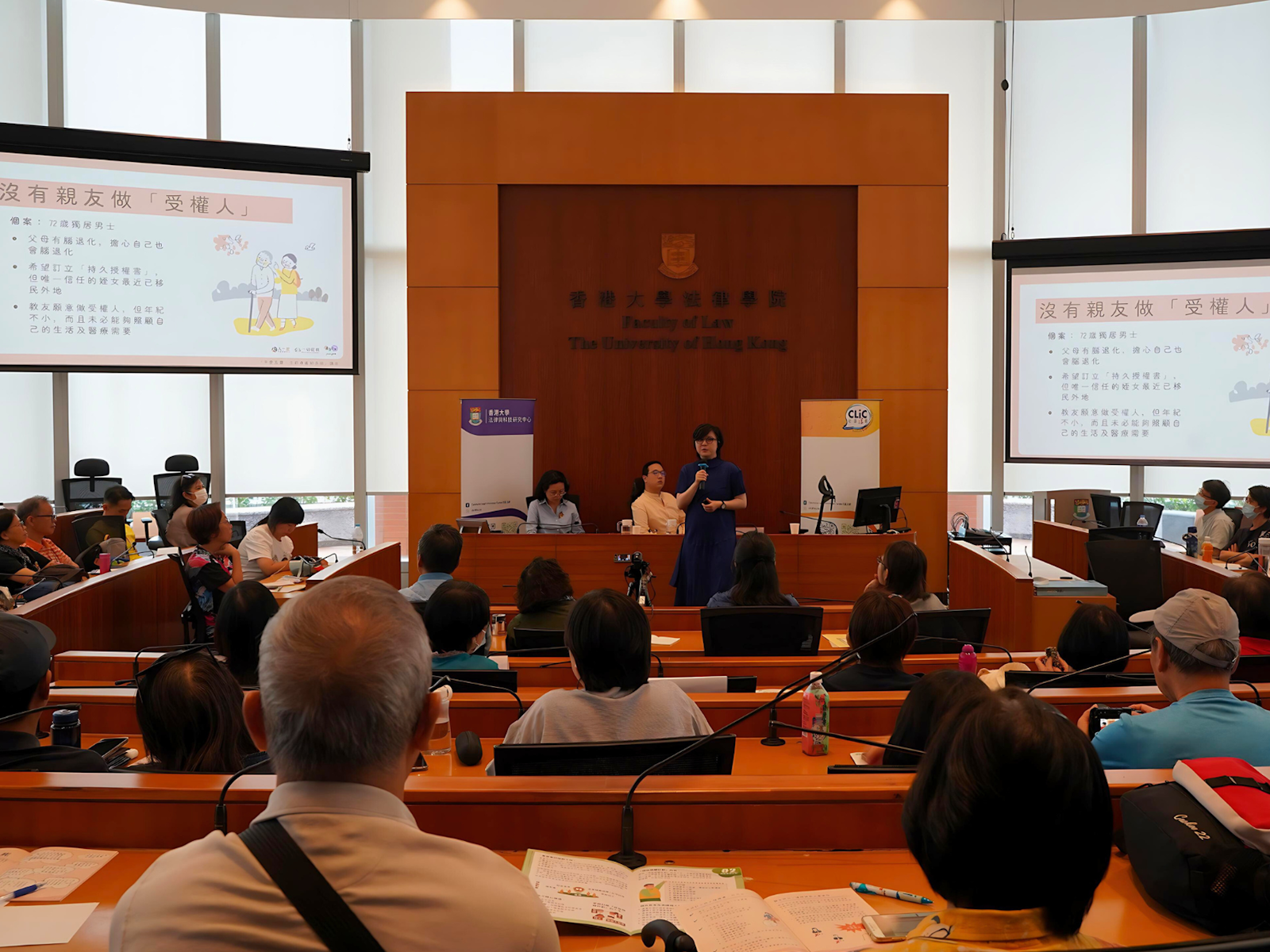
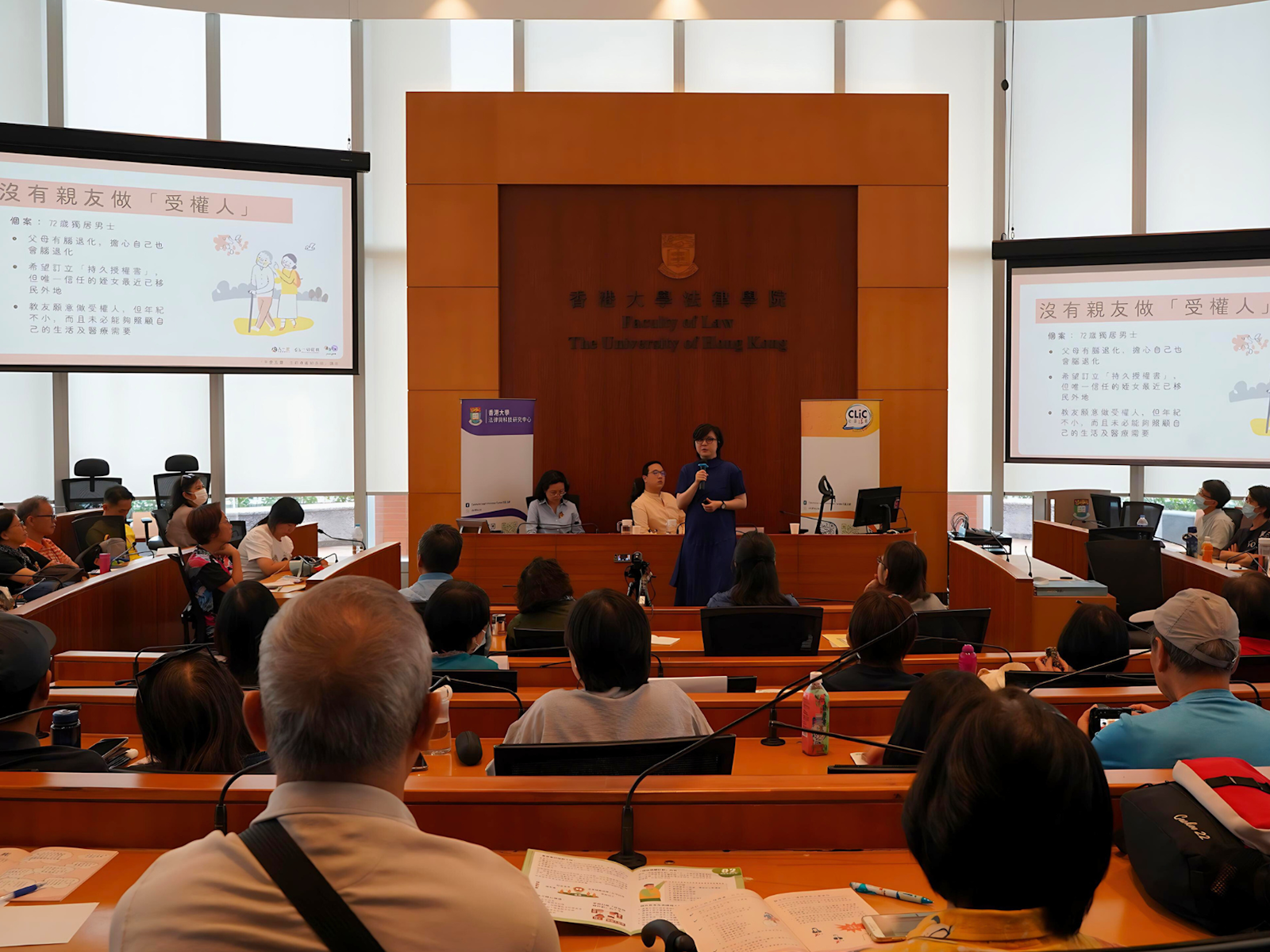
The program’s lawyer partner is invited to speak at a talk for older adults, organised by the Senior Community Legal Information Centre website, on arranging one’s will, enduring power of attorney, and advanced directive in relation to medical treatment.
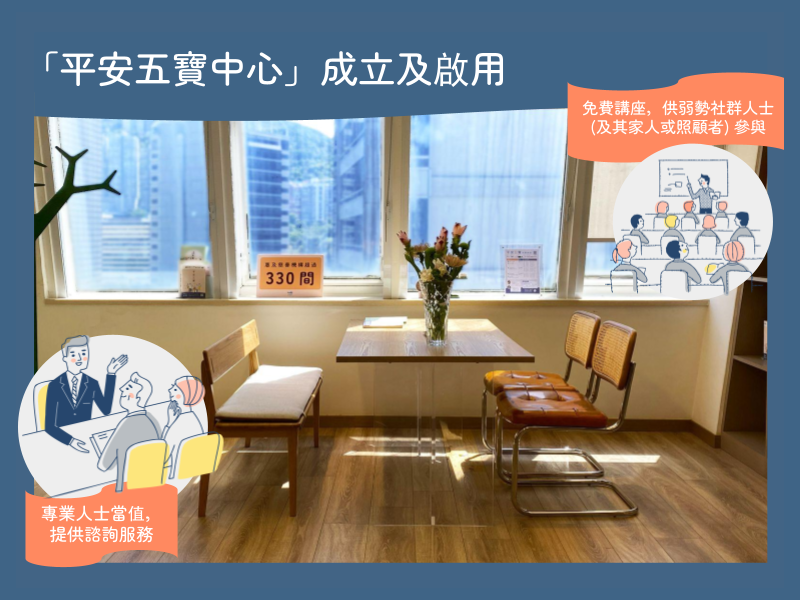
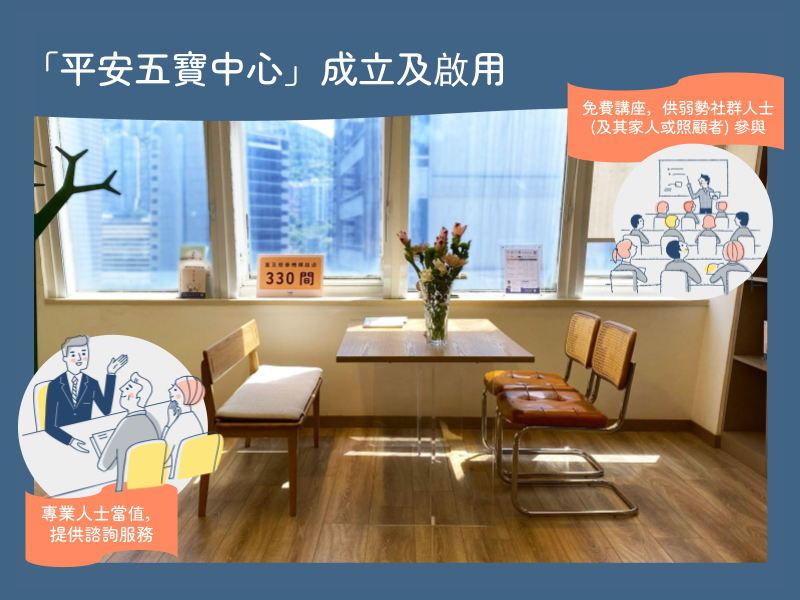
At the Five Blessings Centre, doctors, lawyers, and funeral planners offer regular, free-of-charge individual consultation and document witnessing services to the underprivileged.
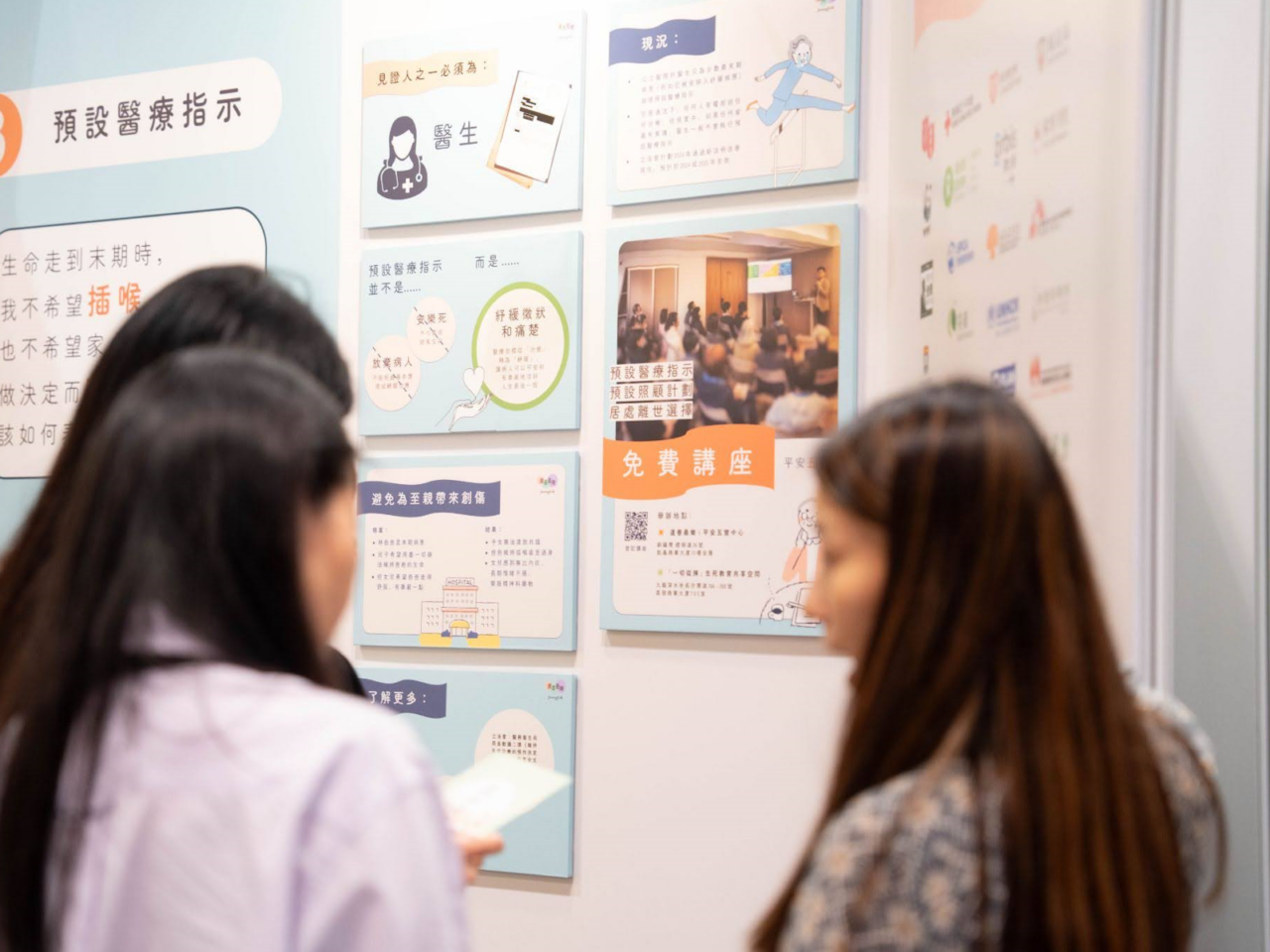
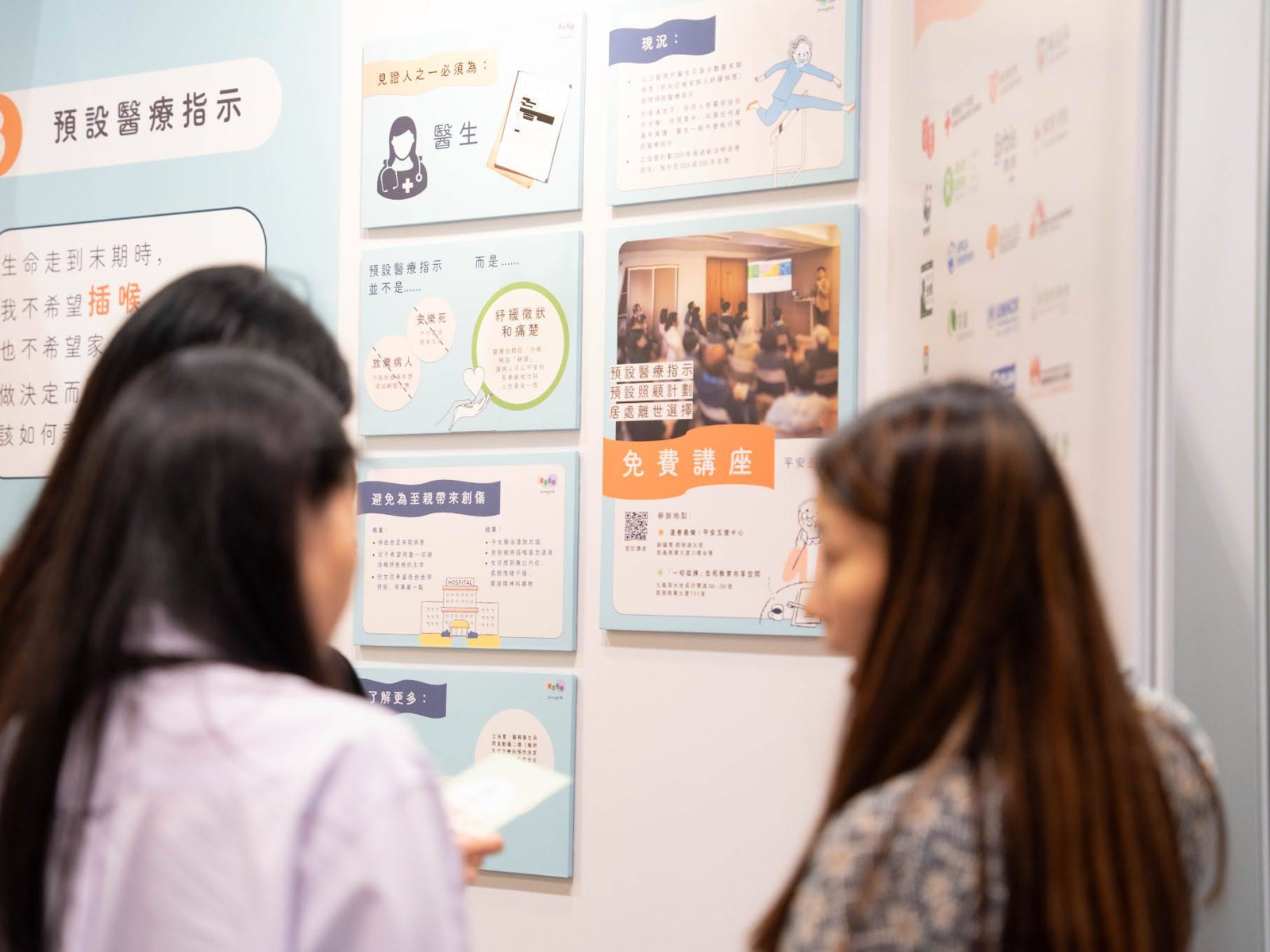
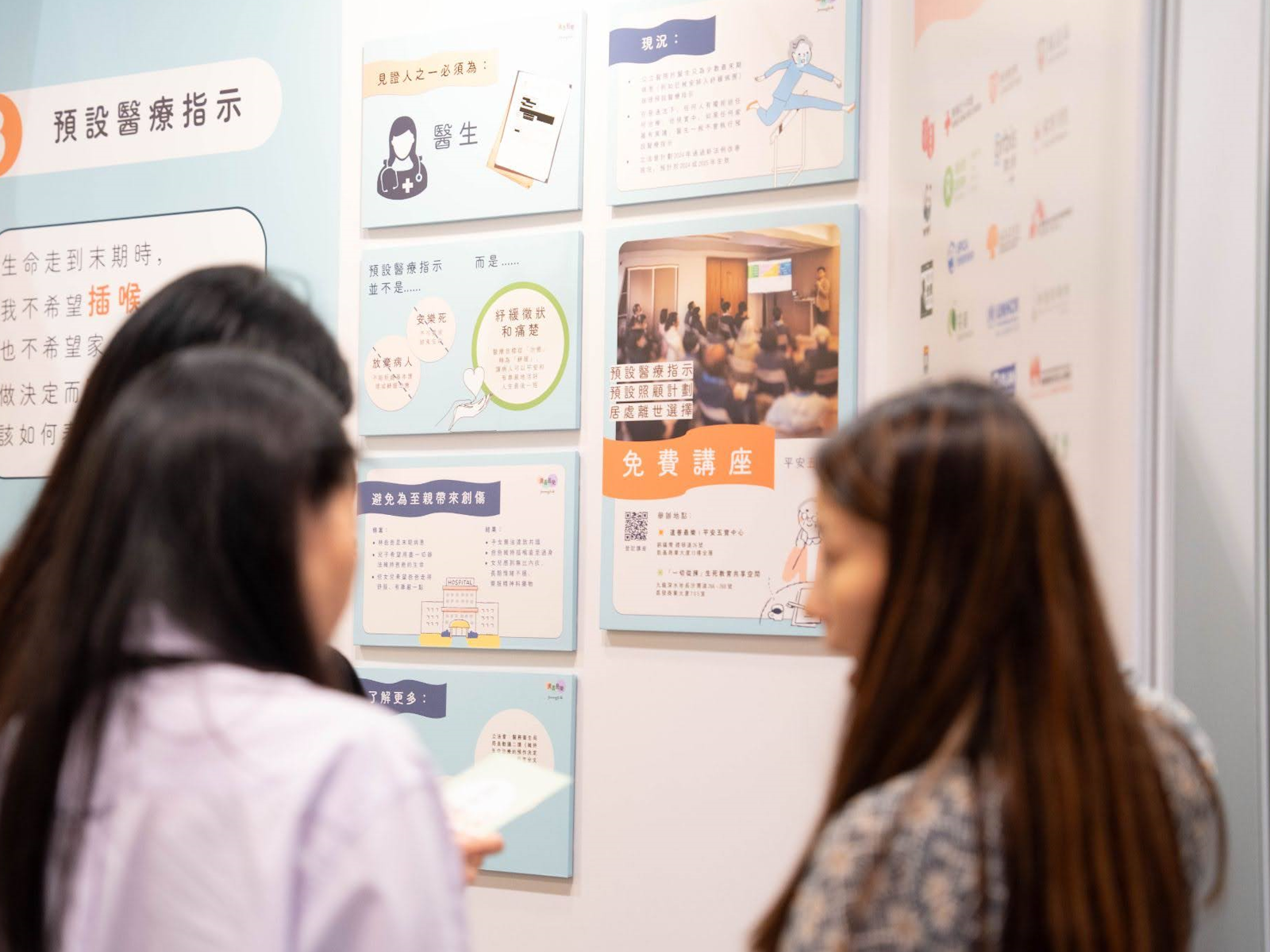
A staff member promotes life and death education at an expo, introducing members of the public and different sectors to the ‘Five Blessings’ services and Inner Peace Program.
The program’s lawyer partner is invited to speak at a talk for older adults, organised by the Senior Community Legal Information Centre website, on arranging one’s will, enduring power of attorney, and advanced directive in relation to medical treatment.
At the Five Blessings Centre, doctors, lawyers, and funeral planners offer regular, free-of-charge individual consultation and document witnessing services to the underprivileged.
A staff member promotes life and death education at an expo, introducing members of the public and different sectors to the ‘Five Blessings’ services and Inner Peace Program.
‘May the Five Blessings descend upon your door’ is an auspicious saying commonly exchanged on festive occasions. In fact, ‘Five Blessings’ comes from Confucian classic The Book of Documents and refers to longevity, wealth, health, virtue, and peaceful passing, in its chapter on Great Plan. In today’s Hong Kong, how can we ensure that our loved ones and ourselves enjoy all Five Blessings in our finite lives?
‘Five Blessings’ is Hong Kong’s first professional life-death planning service. It was launched by OneTake ted jointly with two other local social enterprises, ‘ForeverGift.hk’ and ‘Minimal Funeral Limited’. Let it Go.’ Our team of lawyers, doctors, and funeral planners offer a one-stop solution to arranging one’s will, enduring power of attorney, and advanced directive in relation to medical treatment, besides funeral planning and capturing life stories. We organise talks for social service organisations and the public, so as to help people of different socio-economic backgrounds make preparations for themselves and their loved ones with ease.
To ensure that underprivileged communities can access such services, we established Hong Kong’s first Five Blessings Center, with funding from ZeShan Foundation, other family foundations, and the Social Innovation and Entrepreneurship Development Fund (SIE Fund), as well as support from the Hong Kong Council of Social Service’s Impact Incubator. Our Inner Peace Program aims to popularise life-death planning through public education and professional consultation, as well as offering ‘Five Blessings’ services free-of-charge to older adults and chronically or terminally ill patients referred by social service organisations.
Sharing common goals to improve low-income dwellers’ rental experiences, ZeShan Foundation joined hands with ComHome Social Housing Platform (“ComHome”) in 2022, to pilot the development of a more socially responsible real estate agency model serving underprivileged families in Hong Kong.