
Community Market For Good
Markets are not just where vendors do business, but also where they interact with residents, building the foundations for social networks and social capital. In recent years, traditional wet markets and old shopping centers across Hong Kong have become increasingly quiet, with many units sitting vacant or rarely open for business. On the other hand, young people wishing to try their hand at starting a business and innovating struggle to find suitable and affordable space in this expensive city. Could there be a win-win solution that utilizes and revitalizes idle space, while offering a platform for youth entrepreneurship and innovation, thus creating value for the community?
In Kwun Tong, Yue Man Square, which has undergone a decade of redevelopment, faces similar challenges. Three years ago, hawkers who had been in the area for many years were resettled in a bazaar inside a newly-built mall. But the times had changed, and business was not what it was before. Some vendors left in disappointment, while those who stayed grew increasingly pessimistic. By mid-2024, over 20 stalls out of 135 were vacant. In response, the Good Lab, in collaboration with Make a Difference Institute (MaD) and other partner organizations, launched the “Market for Good” trial there.
“Market for Good” is a community-based youth entrepreneurship incubation program. It aims to encourage youth to develop entrepreneurial ideas that meet community needs through creativity and experimentation, thereby generating shared value and co-creating socially valuable market operation models with community stakeholders.
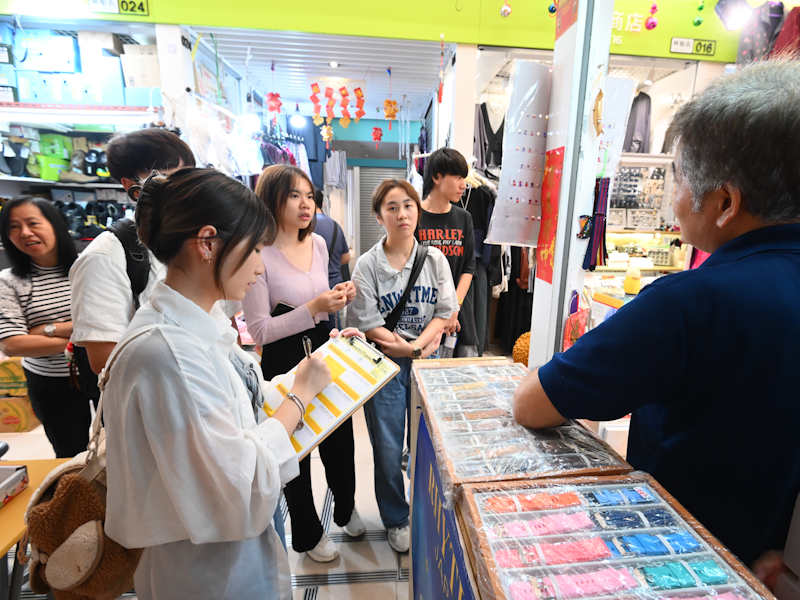
The program, which ran from October 2024 to August 2025, recruited 40 youths aspiring to run small businesses in the community. Eight unique entrepreneurial ideas were incubated through in-depth community exploration, Design Thinking training, idea co-creation, and experimental processes. These were put into practice in a six-month prototype and test run period in Yue Man Hawker Bazaar. On the one hand, our program hoped to offer residents goods and services not typically found in such markets, as well as creating flexibility under the market management system. On the other hand, it hoped to foster deeper connections between the youth and long-standing stall owners, encouraging exchange and community heritage between two generations of entrepreneurs.
Youth Community Entrepreneurship: From Me to We
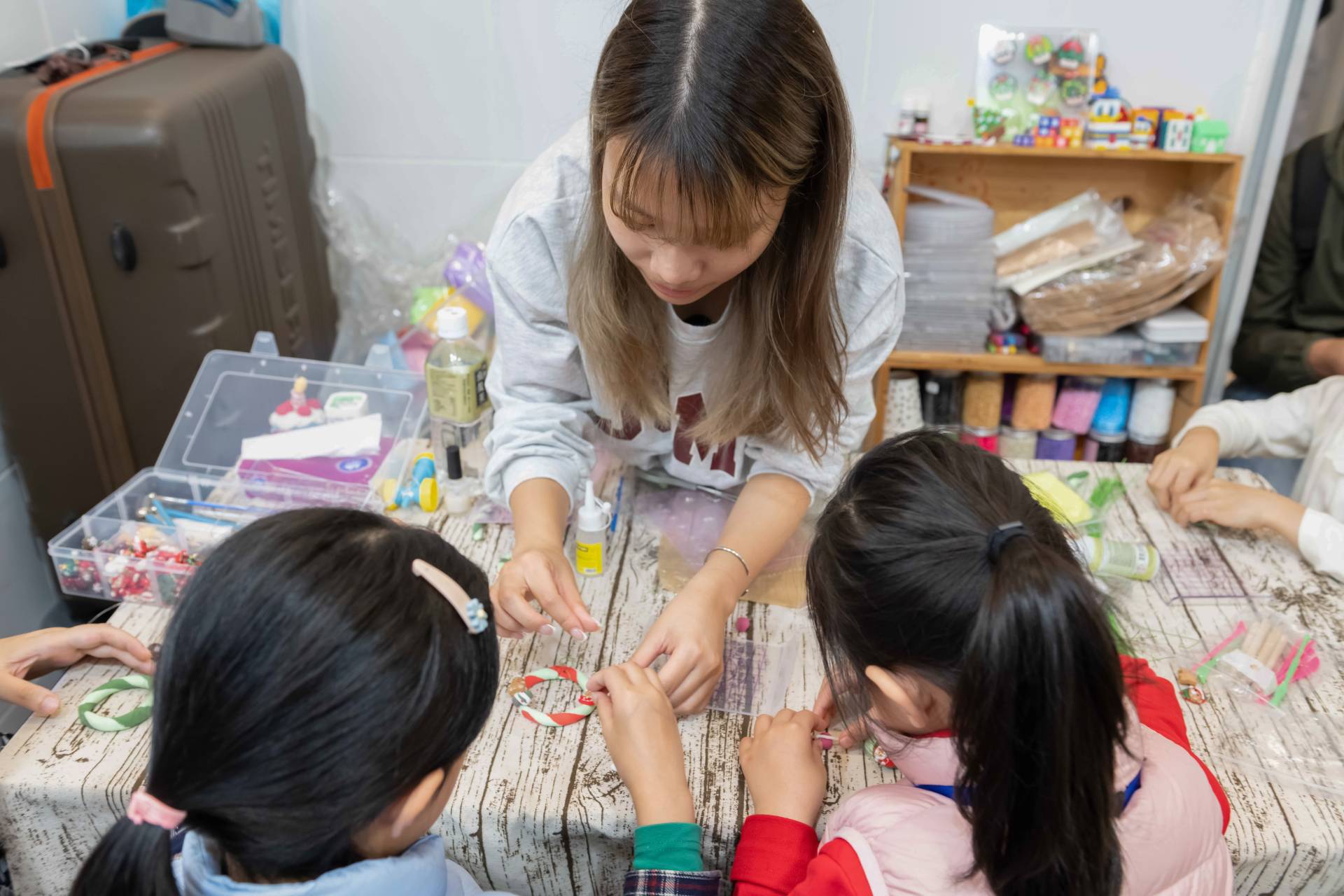
The most touching experience was when an old lady came specifically to learn how to make clay Christmas wreaths. It turned out she wanted to learn this so she could go back to her elderly center and teach the others too. “I never thought what I teach could be passed on by someone else. I suppose this is ‘life touching life’.”
This new generation of community entrepreneurs sought not only business growth, but also the realization of “meaningful” operating models. While their initial ideas often stemmed from their personal interests or academic backgrounds, they gradually broadened their focus toward the society following numerous community change-making activities. In blending personal vision with community needs, they injected their businesses with greater social value. This transformation “from me to we” was precisely an outcome our program wished to achieve.
Youth Stall Owners x Veteran Vendors
“I’d thought only young people would be interested in the Newspaper Photo Booth. It turned out the old stall owners were the most enthusiastic.” These veteran vendors carefully chose hair accessories and brought their own props to the photoshoots, even proudly displaying the photos in their shops afterward. “One of them, a watch-seller and father, even collected the entire set of photos and printed his phone number on it as promotional material.”
Fostering cross-generational exchange and heritage transmission are especially vital in traditional settings like Yue Man Hawker Bazaar, which face the challenges of changing times. Its long-standing businesses have accumulated decades of community networks and experience from their years in Yue Man Square, but struggle to keep up with evolving needs. On the other hand, youth stall owners possess the creative vitality and the knowledge of the latest trends, yet lack practical business experience and operational know-how. The two generations could learn from and influence each other to co-create new business opportunities and social value.
As the times and economic environment change, many traditional markets, wet markets, and older malls in Hong Kong are in decline, with many units becoming “idle space”. In the future, our program will continue to explore how to utilize precious land resources and unlock hidden potential in different corners of society, aiming to nurture the next generation of entrepreneurs and experiment with operational models to create even greater value, whether commercial or social.
Good Lab


Markets are not just where vendors do business, but also where they interact with residents, building the foundations for social networks and social capital. In recent years, traditional wet markets and old shopping centers across Hong Kong have become increasingly quiet, with many units sitting vacant or rarely open for business. On the other hand, young people wishing to try their hand at starting a business and innovating struggle to find suitable and affordable space in this expensive city. Could there be a win-win solution that utilizes and revitalizes idle space, while offering a platform for youth entrepreneurship and innovation, thus creating value for the community?
In Kwun Tong, Yue Man Square, which has undergone a decade of redevelopment, faces similar challenges. Three years ago, hawkers who had been in the area for many years were resettled in a bazaar inside a newly-built mall. But the times had changed, and business was not what it was before. Some vendors left in disappointment, while those who stayed grew increasingly pessimistic. By mid-2024, over 20 stalls out of 135 were vacant. In response, the Good Lab, in collaboration with Make a Difference Institute (MaD) and other partner organizations, launched the “Market for Good” trial there.
“Market for Good” is a community-based youth entrepreneurship incubation program. It aims to encourage youth to develop entrepreneurial ideas that meet community needs through creativity and experimentation, thereby generating shared value and co-creating socially valuable market operation models with community stakeholders.
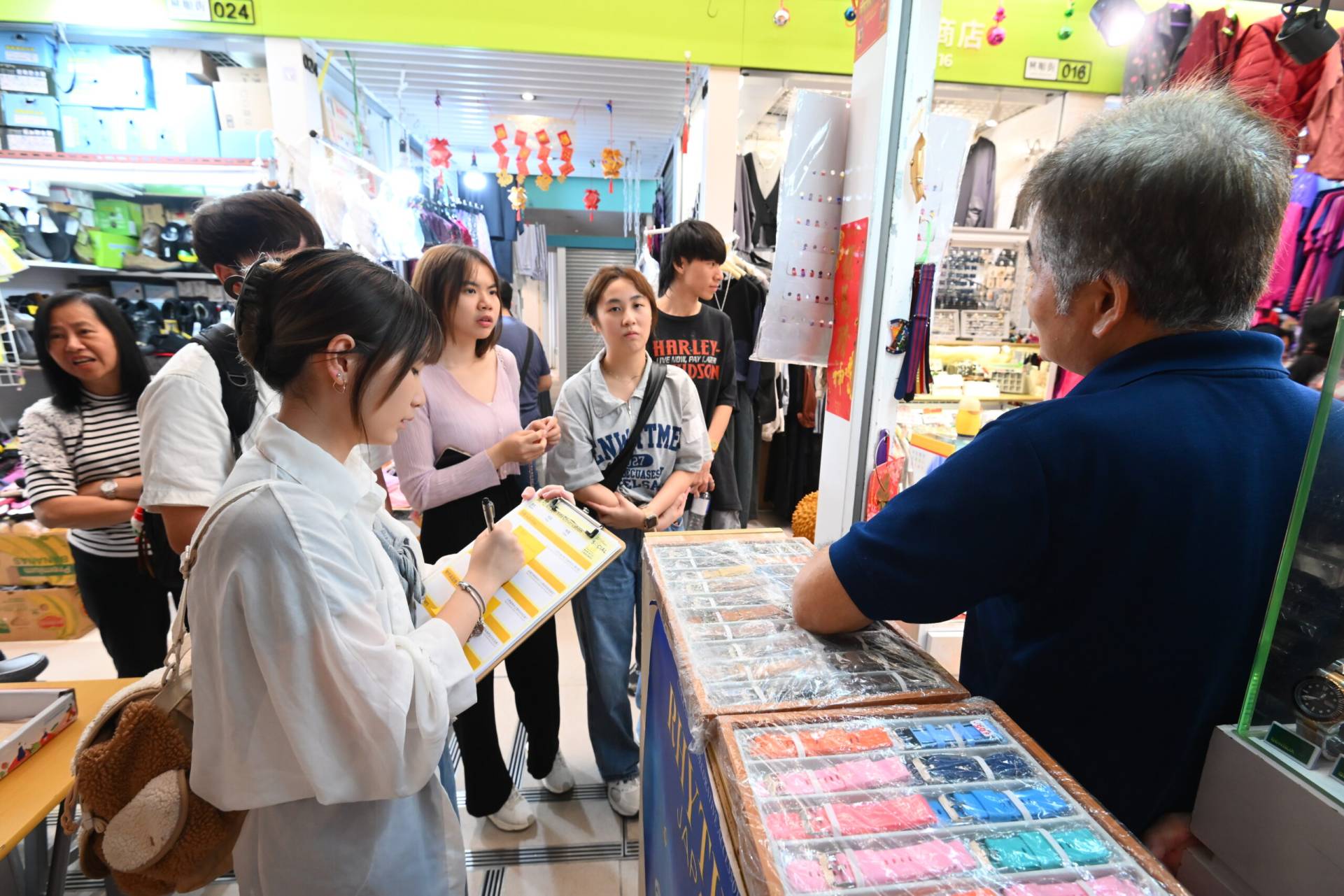
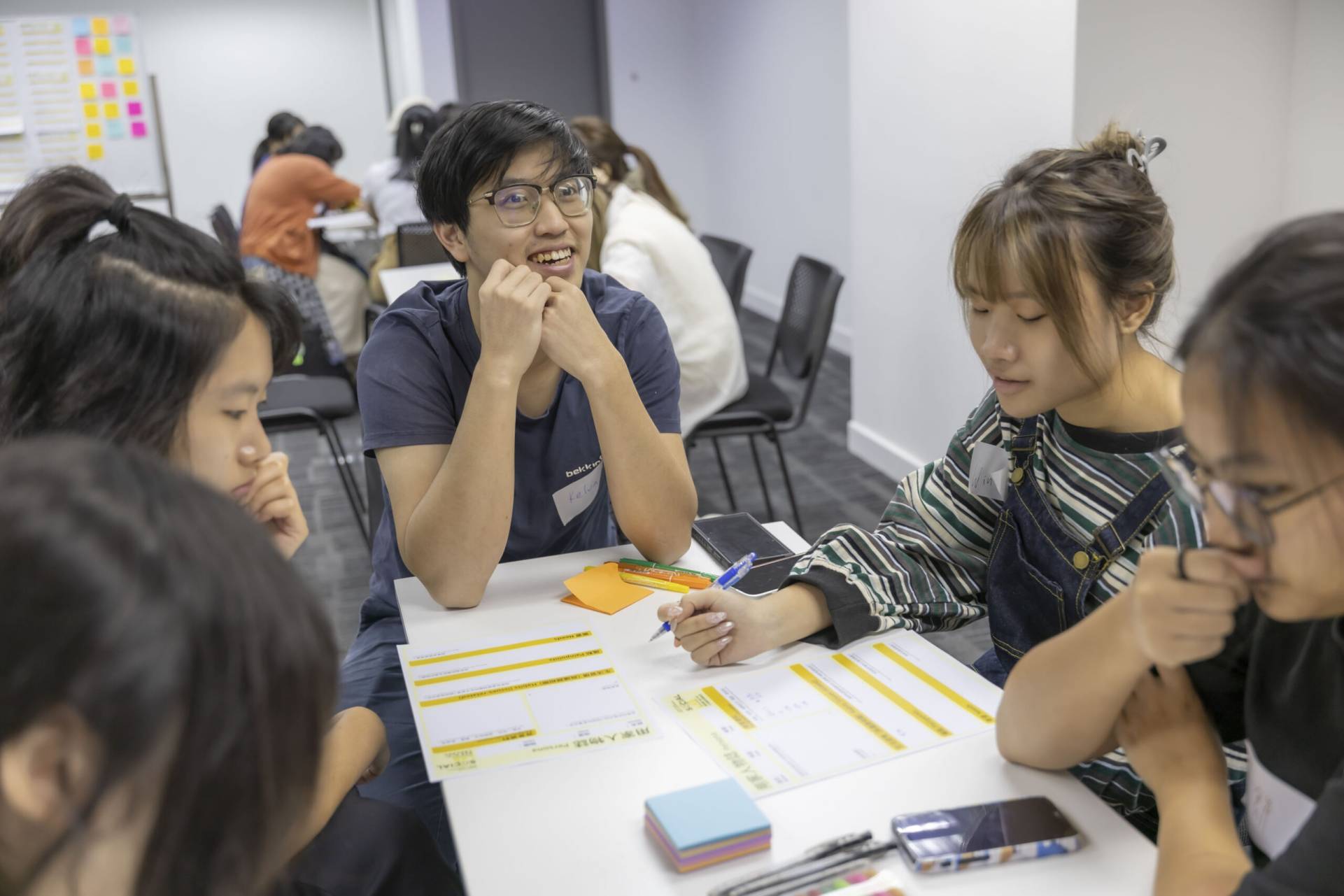
The program, which ran from October 2024 to August 2025, recruited 40 youths aspiring to run small businesses in the community. Eight unique entrepreneurial ideas were incubated through in-depth community exploration, Design Thinking training, idea co-creation, and experimental processes. These were put into practice in a six-month prototype and test run period in Yue Man Hawker Bazaar. On the one hand, our program hoped to offer residents goods and services not typically found in such markets, as well as creating flexibility under the market management system. On the other hand, it hoped to foster deeper connections between the youth and long-standing stall owners, encouraging exchange and community heritage between two generations of entrepreneurs.
The most touching experience was when an old lady came specifically to learn how to make clay Christmas wreaths. It turned out she wanted to learn this so she could go back to her elderly center and teach the others too. “I never thought what I teach could be passed on by someone else. I suppose this is ‘life touching life’.”
This new generation of community entrepreneurs sought not only business growth, but also the realization of “meaningful” operating models. While their initial ideas often stemmed from their personal interests or academic backgrounds, they gradually broadened their focus toward the society following numerous community change-making activities. In blending personal vision with community needs, they injected their businesses with greater social value. This transformation “from me to we” was precisely an outcome our program wished to achieve.
Youth Stall Owners x Veteran Vendors
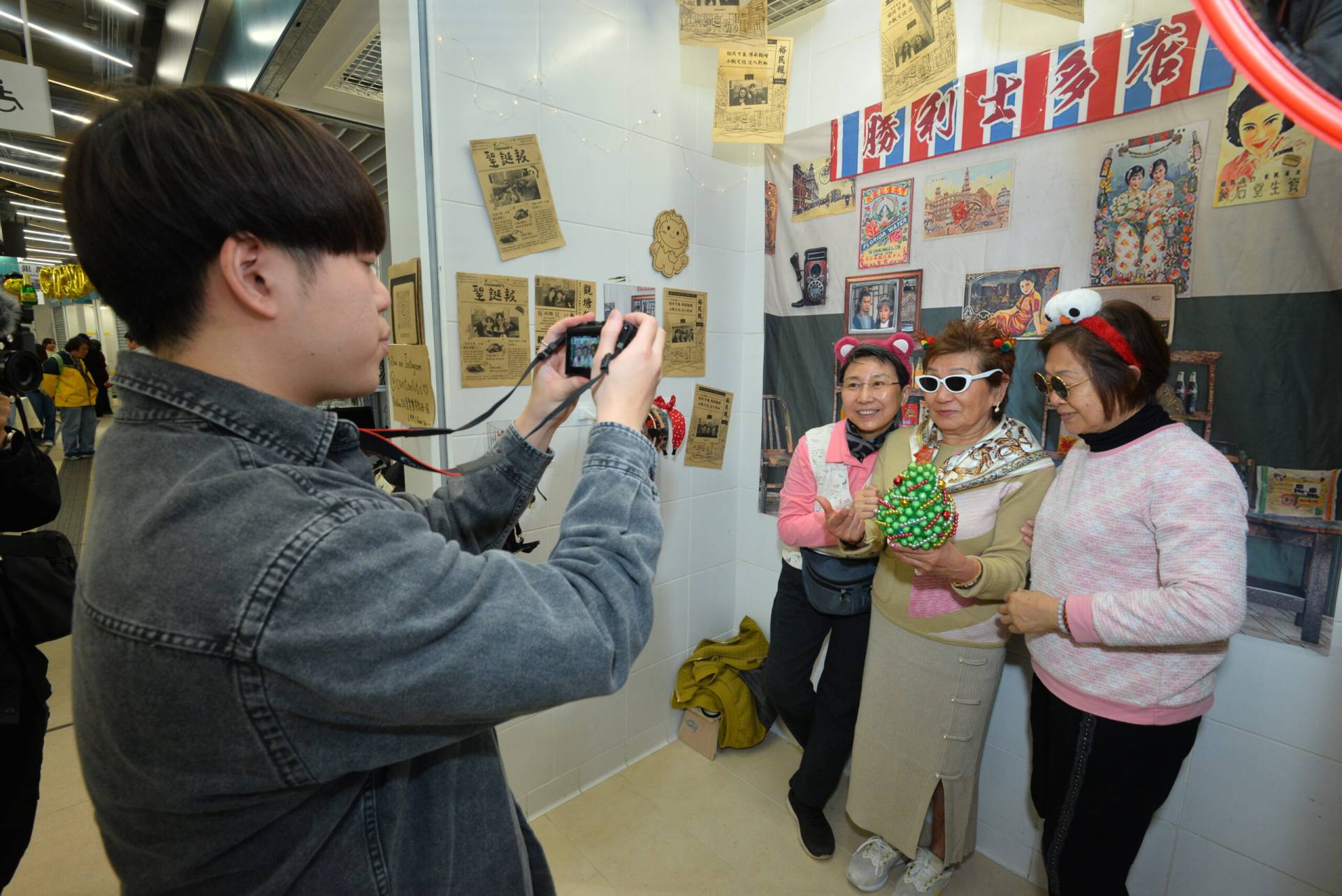
“I’d thought only young people would be interested in the Newspaper Photo Booth. It turned out the old stall owners were the most enthusiastic.” These veteran vendors carefully chose hair accessories and brought their own props to the photoshoots, even proudly displaying the photos in their shops afterward. “One of them, a watch-seller and father, even collected the entire set of photos and printed his phone number on it as promotional material.”
Fostering cross-generational exchange and heritage transmission are especially vital in traditional settings like Yue Man Hawker Bazaar, which face the challenges of changing times. Its long-standing businesses have accumulated decades of community networks and experience from their years in Yue Man Square, but struggle to keep up with evolving needs. On the other hand, youth stall owners possess the creative vitality and the knowledge of the latest trends, yet lack practical business experience and operational know-how. The two generations could learn from and influence each other to co-create new business opportunities and social value.
As the times and economic environment change, many traditional markets, wet markets, and older malls in Hong Kong are in decline, with many units becoming “idle space”. In the future, our program will continue to explore how to utilize precious land resources and unlock hidden potential in different corners of society, aiming to nurture the next generation of entrepreneurs and experiment with operational models to create even greater value, whether commercial or social.
Good Lab